

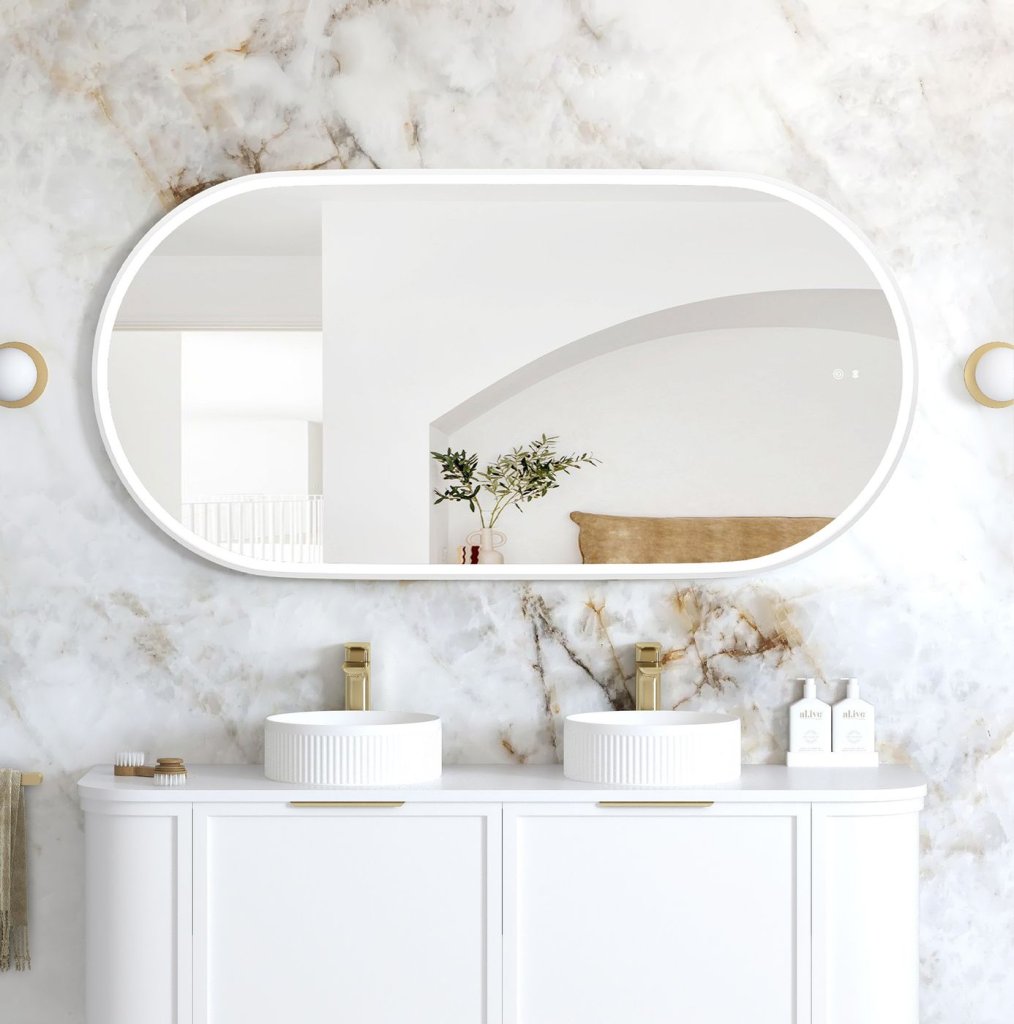
An LED mirror sample is more than a sales display. For an importer, hotel, developer or bathroom brand, it should become a controlled reference for the bulk order. Approval should therefore cover measurable dimensions, appearance, lighting, electrical configuration, functions, compliance evidence and packaging—not simply whether the mirror looks attractive when switched on.
The seven-part checklist below helps buyers turn a sample review into a production-ready specification. It is written for B2B procurement, but the same questions are useful for designers and contractors selecting a mirror for a single project.
Before the Sample Arrives: Create an Approval Record
Give the sample a model code, revision number and date. Record the destination market, supply configuration, requested size, finish, functions and intended installation. Attach the supplier’s latest drawing and quotation revision. If two samples have different components or controls, treat them as different versions rather than combining the best features from memory.
Agree in advance what the sample is intended to prove. A visual sample may confirm shape and finish without carrying final electrical components. A functional sample may confirm lighting and controls but use a provisional carton. That can be acceptable if every exception is written down and closed before bulk production. “Approved” should never mean that unreviewed details are assumed to be correct.
1. Overall Dimensions, Tolerances and Mounting Interface
Start with the physical interface to the room. Measure the mirror’s width, height, thickness, frame projection and total projection from the finished wall. Check weight, bracket type, bracket positions, fixing-hole centres and the clearance required to lift or slide the mirror onto its mount. Confirm the cable exit, driver or control-box position and any space needed behind the mirror.
Compare the sample with a dimensioned drawing rather than a product name such as “900 mm mirror.” The nominal size does not define allowable variation or the position of concealed components. For projects, state tolerances and how they will be measured. Critical interfaces may include alignment with a vanity, basin centreline, wall joints, electrical outlet, tapware or neighbouring cabinets.
- Record actual sample measurements beside the drawing values.
- Confirm portrait or landscape orientation and whether rotation is permitted.
- Check that the fixing method suits the intended wall construction.
- Ask the project installer to review mounting and electrical locations before approval.
2. Mirror Glass, Edges, Backing and Frame Finish
Inspect the glass in both daylight and controlled indoor light. Look for scratches, chips, black spots, coating defects, visible distortion and inconsistent reflection. View straight lines and faces from normal use positions; a phone photograph alone is not a reliable distortion check. Confirm the specified glass thickness, edge treatment, corner radius, safety treatment where required and the construction of the rear backing.
For framed models, record the frame material, profile, joint appearance, colour, gloss level and acceptable variation. Use a signed physical swatch or controlled colour reference when finish consistency matters. Terms such as “gold,” “brushed black” or “wood look” are not precise enough for repeat orders. If the supplier makes a corrosion-resistance claim, request the relevant test method and evidence rather than assuming that a material name guarantees performance in every environment.
3. Lighting Performance and Visual Appearance
Define the type of lighting first: front-lit, edge-lit, backlit or combined. Then review the illuminated width, diffuser, distance from the wall and whether the sample shows visible LED points, dark areas, colour variation or uneven halo effects. Examine it at the intended viewing distance and against a wall colour similar to the project.
The approved specification should state each required colour-temperature setting and its tolerance, the declared colour-rendering requirement where relevant, dimming range and control sequence. If light output is important, request appropriate measurement data; electrical input alone does not describe useful illumination. Also check start-up behaviour, low-level dimming stability, audible noise and visible flicker under the intended supply and control arrangement.
Do not approve lighting solely from images or video. Camera exposure and white balance can make two different samples appear identical. Use the same room, supply and viewing procedure when comparing revisions, and label the accepted sample so it can be distinguished from rejected versions.
4. Electrical Configuration, Controls and Critical Components
The sample must match the destination market and installation method. Record rated voltage and frequency, connection type, cable length and exit position, plug or terminal arrangement, earthing or other protection construction, driver model and control module. The applicable electrical classification and documentation depend on the complete product design, so they should be reviewed by a qualified person for the target market.
Test every included function and write down the operating sequence. For touch controls, confirm icon position, visibility, response and whether separate functions use separate buttons. For sensors, define activation distance and behaviour. Check dimming, colour selection, memory, clock or other optional functions only if they are part of the approved order.
Power-cycle the sample using the intended control method. A hotel room system, wall switch and permanent supply can produce different user experiences. Record whether the mirror remains off, returns to a default mode or recalls the previous setting. Require notification and approval before the supplier changes a critical driver, LED module, sensor, demister control or power component after sample approval.
5. Demister Coverage and Operating Logic
A demister is an optional heated area attached behind the mirror. It does not make the mirror waterproof, and it does not guarantee that the full glass surface will stay clear in every bathroom. Record the pad dimensions and position on the approved drawing. Check whether it operates with the light, from an independent control or through a timed function.
Agree a repeatable functional check that reflects the intended use. The result depends on room temperature, humidity, ventilation, condensation level, heated area and operating time. Approval language should describe the tested area and conditions instead of promising a universal clearing time. Inspect the rear assembly for secure placement and confirm that the demister and its control are included in the electrical and compliance review.
6. Environmental Suitability and Compliance Evidence
Ask which ingress-protection code is declared for the exact mirror configuration and request the evidence supporting it. An IP code describes protection under defined test conditions. IP44 does not mean “waterproof,” and a higher number should not be treated as automatic permission to install a mirror anywhere in a bathroom. Product location and installation must comply with the destination market’s rules.
Review reports and certificates at model level. The model reference, product photographs or construction, voltage, driver, controls and other critical components should correspond to the proposed order. A certificate held by a component supplier is not automatically evidence for the complete mirror. Likewise, one report should not be applied across different sizes or feature combinations unless its scope supports that use.
Create a document list for the target market and procurement route. Depending on configuration, this may involve electrical safety, electromagnetic compatibility, radio requirements for connected functions, energy or labelling obligations and project-specific documentation. ArcQuay’s market pages can help organize the initial brief, but final applicability should be confirmed by the buyer’s compliance adviser, project consultant or relevant authority.
7. Packaging, Labels, Instructions and the Production Reference
A good product sample can still fail in transit if packaging is treated as an afterthought. Approve the protective film, corner protection, cushioning, inner supports, accessory location, carton construction and handling marks. Confirm how brackets, fasteners and instructions are packed so that they cannot damage the glass. If a transport or drop-test procedure is required, define it in the order rather than relying on a general “export carton” description.
Review the rating label, model code, electrical information, warnings, batch or traceability marking, barcode and destination-specific text. Check the installation manual against the approved mounting and electrical configuration. It should not show a different bracket, cable position or control layout.
After approval, retain a clearly identified “golden sample” or a signed sample record with detailed photographs. The physical sample is useful for appearance and function, but it should be supported by measurable documents. Bulk production should be controlled by the approved drawing, functions matrix, critical-component list, finish reference, packaging specification and change-approval process.
LED Mirror Sample Approval Record
| Record field | What to enter |
|---|---|
| Product identity | Buyer item number, supplier model, revision, sample date and photographs |
| Target configuration | Market, voltage/frequency, connection, size, finish and orientation |
| Functions | Lighting modes, dimming, controls, memory, demister and any optional functions |
| Reference documents | Approved drawing, specification, component list, reports, labels and manual revisions |
| Packaging | Carton revision, protection method, accessories, marks and agreed tests |
| Decision | Approved, approved with listed actions, or rejected |
| Authorization | Buyer and supplier names, dates and closure evidence for outstanding actions |
Common Reasons to Withhold Approval
- The sample dimensions, mounting points or cable exit do not match the drawing.
- Glass defects, distortion, frame joints or finish variation exceed the agreed standard.
- Lighting shows obvious hotspots, dark areas or inconsistent colour between samples.
- Controls, memory or power-restoration behaviour differ from the agreed functions matrix.
- The driver, sensor, wiring or label does not match the proposed documented configuration.
- A demister or ingress-protection claim is made without a defined scope or supporting evidence.
- The carton, manual or accessories remain provisional with no closure date.
“Approved with comments” should be used carefully. List each open action, the person responsible and the document or replacement sample needed for closure. Do not release bulk production while critical safety, compliance, dimensional or packaging points remain ambiguous.
Turn the Sample Into a Repeatable Bulk Specification
Sample approval only protects the order when it is connected to production and inspection. Issue one controlled approval pack containing the drawing, product specification, functions matrix, critical components, finish reference, labels, manual and packaging standard. Identify which characteristics will be checked during production and at pre-shipment inspection, together with the sampling plan or acceptance rules agreed by the parties.
For custom sizes or project orders, align this pack with room schedules and installation drawings before manufacture. ArcQuay’s project solutions and LED mirror supply overview provide relevant product pathways. Buyers comparing powered and non-powered options can also read LED Mirror vs Standard Mirror: A Practical Buyer’s Guide.
Final Approval Principle
A successful sample approval replaces adjectives with evidence. “Premium,” “waterproof” and “high quality” do not tell a factory or inspector what to reproduce. Dimensions, tolerances, materials, light settings, control behaviour, component references, test evidence, labels and packaging do. When those seven specification groups are recorded and signed, the sample becomes a useful production control rather than a subjective showroom impression.
To request an LED mirror review, send ArcQuay a project brief with the destination market, dimensions, quantity, lighting arrangement, required functions, electrical configuration and documentation needs.