
Glass and finish
Record overall size, shape, thickness where critical, edge treatment, reflective area, frosted pattern, frame or exposed backing and allowable visual defects.

ArcQuay is an LED bathroom mirror manufacturer and supplier for distributors, brands and project buyers. Each program coordinates mirror construction, lighting, electrical configuration, controls, mounting, sample approval and packing against one reviewed model specification.
Content owner: ArcQuay Product & Project Team ·
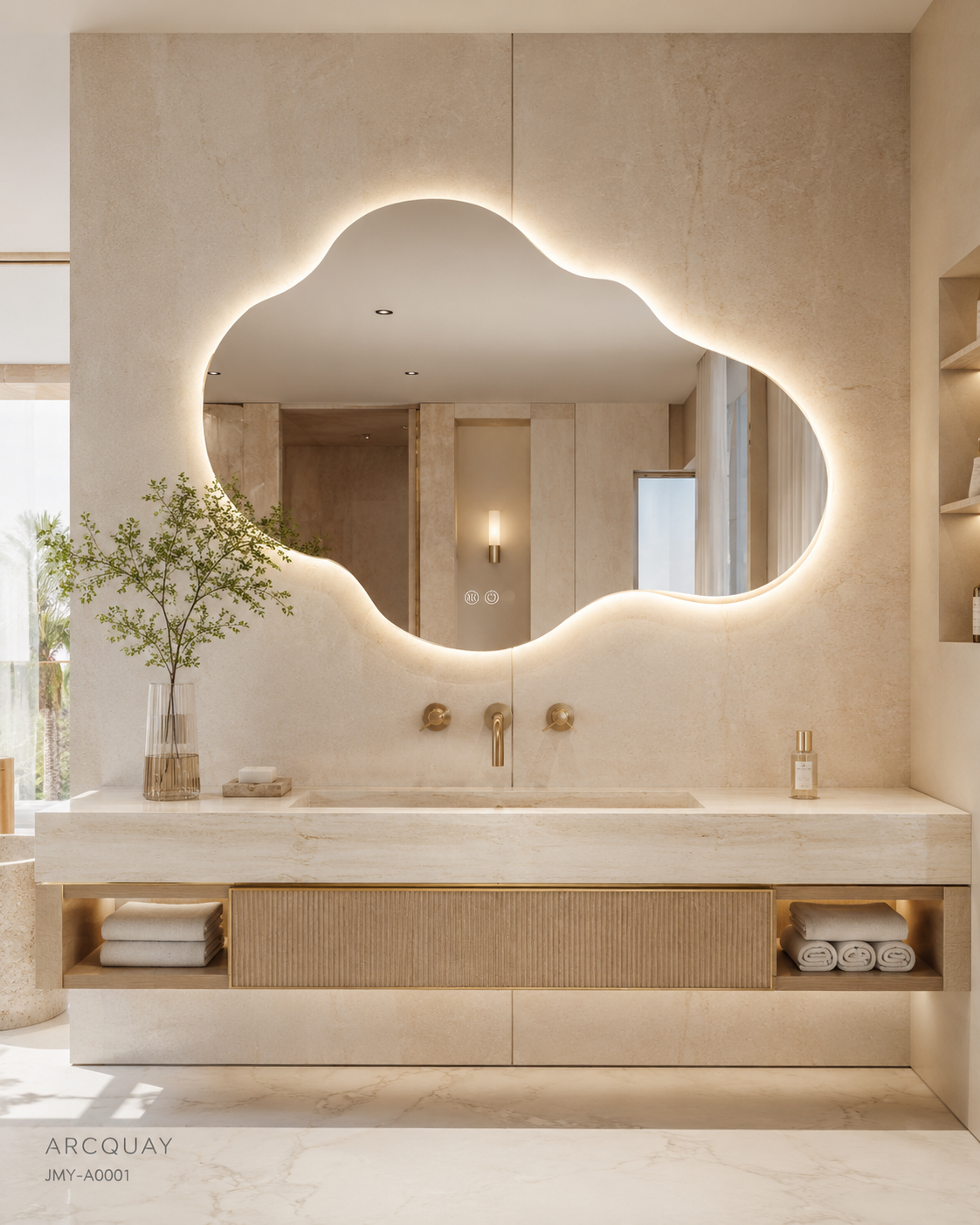
An LED bathroom mirror combines processed mirror glass, a lighting arrangement, power components, wiring, controls, backing or frame parts, mounting hardware and protective packaging. A change to size, edge shape, lighting pattern, driver, sensor or mounting method can alter both manufacturing steps and the documents needed for review.
ArcQuay coordinates product information with selected supply resources. The contractual party, assembly location and responsibility for specialist components are confirmed for the programme. A generic “LED mirror factory” claim is not treated as proof that a proposed model is suitable for a particular country or installation.
Use measurable requirements and approved references instead of feature names alone.
Record overall size, shape, thickness where critical, edge treatment, reflective area, frosted pattern, frame or exposed backing and allowable visual defects.
Define illuminated zones, colour setting, dimming behavior, user controls and the sample conditions used to judge brightness and appearance.
Confirm destination, input requirement, driver, wiring, connector, earthing arrangement where applicable and how installation is intended to be completed.
List touch, sensor, demister or other requested functions separately; state default state, indicator behavior and interaction rather than assuming a feature bundle.
Provide orientation, wall construction, fixing points, cable position, service access and the room-zone requirements identified by the project team.
Define glass-edge protection, face protection, hardware retention, carton marks, pallet or crate expectations and restrictions in the logistics route.
Category labels organize discovery; each product page and quotation determines actual inclusions.
A photograph cannot validate light quality, control behavior, cable position or installation access.
Identify drawing, dimensions, glass, lighting, controls, components, mounting and packing version.
Review reflection, edges, pattern, frame, backing, visible gaps and workmanship under agreed conditions.
Check switching, settings, indicators, memory behavior if specified and interactions between requested controls.
Use an agreed room condition, distance and comparison reference; record expectations rather than relying on phone-camera exposure.
Compare fixing positions, wall clearance, cable exit, connector and access with the project drawing.
Assign a sample code and revision, list accepted differences and update affected specifications before release.
The exact quality plan is agreed by programme. Test methods and acceptance limits should be defined by qualified parties where electrical or regulatory judgment is required.
| Checkpoint | Typical review | Reference |
|---|---|---|
| Identity | Model, size, finish, electrical label and revision | PO and specification |
| Appearance | Glass, edges, pattern, frame and visible workmanship | Approved sample and criteria |
| Function | Lighting, controls and each ordered option | Function schedule |
| Interfaces | Mounting points, backing, cable exit and accessories | Approved drawing |
| Packing | Protection, hardware, labels and carton condition | Packing instruction |
Minimums, sample timing and production schedule depend on size, component set, feature variation, packing and current availability. They are confirmed after the configuration is reviewed.
Public guidance from established bathroom-product manufacturers is reviewed to identify common planning questions, including mirror size, lighting intent, electrical connection, mounting, service access and compatibility with the surrounding vanity area.
ArcQuay does not transfer another brand's specification, certification, ingress rating, test result or warranty to an ArcQuay model. Requested functions are treated as a customisation brief until feasibility, component selection, the approved sample and destination-specific evidence have been confirmed in writing.
For related planning context, see the Kohler vanity planning guide and ArcQuay's bathroom vanity manufacturing review.
Potentially, subject to shape, glass processing, lighting layout, component position, quantity and production route. A change may require a revised drawing and sample before quotation or order approval.
No. Product configuration and destination obligations vary. The buyer or importer should confirm requirements, while ArcQuay coordinates the selected model's available information for review.
No. The brief should identify demister area, control method, expected use condition and approval method. Actual model inclusions are stated in the quotation.
Yes. Agree the provider, stage, sampling method, function checks, acceptance criteria, reporting and release authority before production.
Send the destination, dimensions, visual reference, lighting, controls, electrical requirements, quantities and required documents. ArcQuay will organize the first feasibility review.