

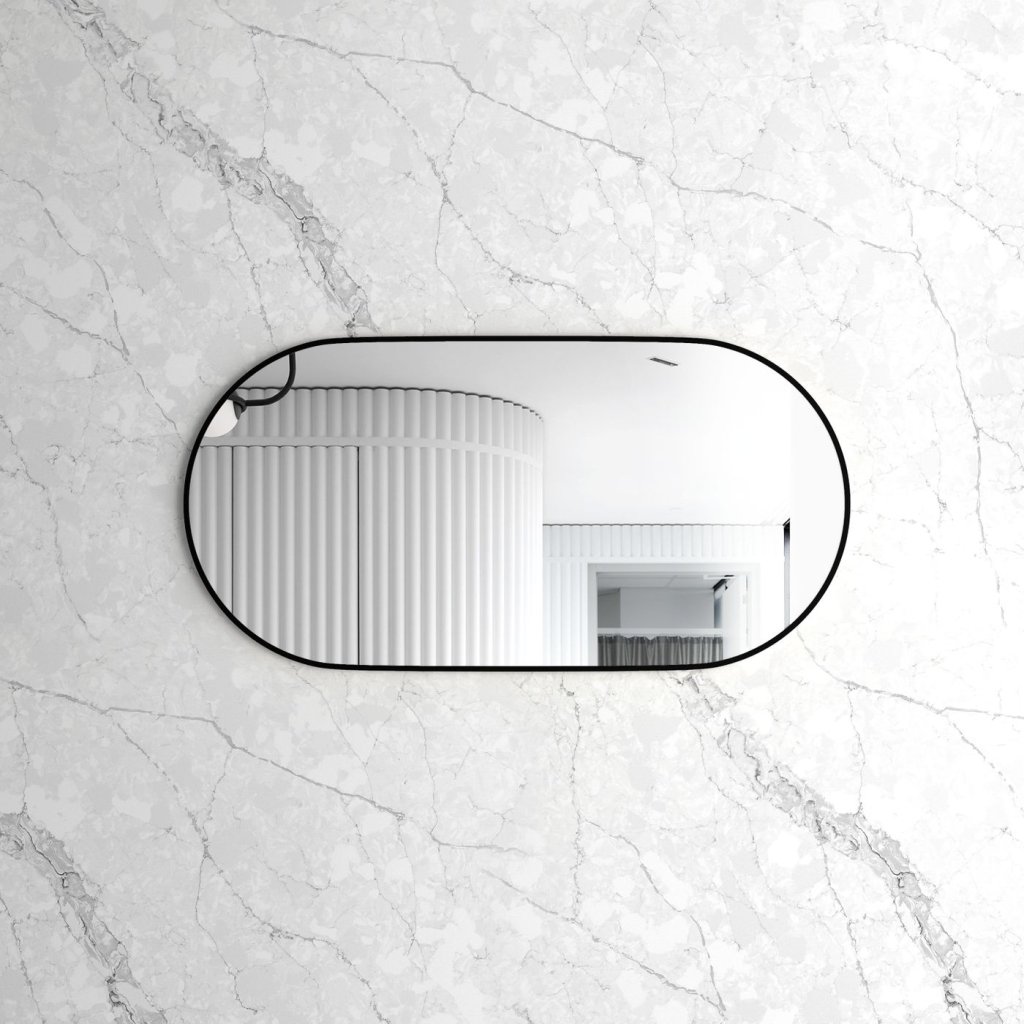
A smart bathroom mirror combines a reflective surface with one or more powered functions, most commonly integrated LED lighting, a demister pad and electronic controls. Some models add clocks, sensors, audio or other features, but the word “smart” does not describe one universal product standard.
That distinction matters to architects, hotel developers, distributors and procurement teams. Two mirrors may look similar in a catalogue while differing substantially in light quality, electrical design, mounting method and serviceability. A useful product review therefore starts with the application and the specification—not the label on the product.
What Does “Smart Bathroom Mirror” Mean?
Manufacturers and retailers use several overlapping terms. Understanding them makes it easier to compare quotations and avoid assumptions.
- Standard bathroom mirror: a non-powered mirror that relies on separate room or vanity lighting.
- LED bathroom mirror: a mirror with integrated front lighting, backlighting or both. It may use a wall switch, touch control or sensor.
- Smart bathroom mirror: a broad commercial term for an LED mirror with additional functions such as dimming, color-temperature selection, demisting or memory control.
- Connected or digital mirror: a more specialized product that may include a display, app connection, media functions or integration with another building system.
These categories are not regulated definitions, and suppliers may use them differently. Project buyers should list the required functions individually in the specification. If a feature is important, it should appear on the approved drawing, product data sheet and sample rather than being assumed from the phrase “smart mirror.”
The Main Parts of a Smart Bathroom Mirror
Mirror glass and edge treatment
The reflective glass remains the foundation of the product. Its dimensions, shape, edge finish, backing and visual quality affect both appearance and installation. A frameless mirror may have polished, beveled or otherwise finished edges, while a framed model conceals or protects the perimeter. For project work, buyers should also confirm the rear construction, mounting points and any safety backing required for the intended application.
Integrated lighting
LED lighting may be directed through a frosted area at the front of the glass, projected onto the wall from behind, or combined in a front-and-back-lit design. Front lighting is generally selected when facial illumination is a priority. Backlighting creates a softer architectural effect and can help define the mirror on the wall, but it should not automatically be treated as the only task light in the room.
Light performance depends on more than the LED strip. The optical diffuser, spacing, driver, heat management and distance from the wall all influence visible hotspots, glare, brightness and color consistency. Available color temperatures, dimming behavior and color rendering also vary by model.
Demister system
A demister is a low-profile heated pad applied to a defined area behind the mirror. When activated, it warms that area to reduce condensation on the front surface. It does not remove humidity from the bathroom, and it may not keep the entire mirror clear unless the pad is designed to cover the required viewing area.
Demister operation can be linked to the light, controlled independently or managed by a timer, depending on the product. Buyers should check the pad location, coverage and control logic on the technical drawing rather than relying on a generic “anti-fog” icon.
Controls and power components
Common control options include a wall switch, capacitive touch button, infrared sensor or a combination of controls. A driver converts the incoming electrical supply to the output required by the LEDs, while other modules may manage the demister, memory setting or accessories.
The connection method, voltage, frequency and switching arrangement must suit the destination market and the installation plan. Some products are designed for a fixed connection and others may use a cord or plug where permitted. Final installation should be coordinated with the project’s electrical documentation and completed in accordance with local requirements.
Optional functions
Depending on the product family, options can include a clock or temperature display, Bluetooth audio, occupancy sensing, USB charging, a shaving socket or integration with a mirror cabinet. These features can add value in the right setting, but they also add components, user-interface decisions and potential service requirements. For multi-unit projects, a consistent and maintainable feature set is often more valuable than the longest feature list.
How the System Works
In a typical powered mirror, the incoming supply feeds one or more protected components behind the glass. The LED driver powers the lighting circuit. A separate circuit or controller may operate the demister, and the user interface sends commands for switching, dimming or color selection. The rear housing or frame organizes these parts and creates space between the mirror and the wall.
This construction makes coordination important. The wall outlet or cable position must not conflict with the rear enclosure or mounting brackets. The finished wall needs adequate support, and the installer needs access to complete the connection and hang the mirror securely. If components are intended to be replaceable, the installation should allow the mirror to be removed without damaging surrounding finishes.
Common Product Formats
Frameless LED mirrors
Frameless models provide a clean, minimal appearance and can be produced in rectangular, round, oval and selected custom shapes. They are widely used where the mirror is intended to sit quietly within a broader bathroom design. Edge quality, rear spacing and the relationship between the illuminated area and the glass perimeter are important visual details.
Metal-framed mirrors
A metal frame gives the mirror a more defined architectural outline and can coordinate with tapware, shower screens or hardware. The frame profile, corner construction, finish color and resistance to the intended environment should be included in the approved sample. A finish name alone may not ensure a match with another supplier’s product.
Illuminated acrylic-frame mirrors
Selected designs use an acrylic or light-transmitting perimeter to create a distinctive illuminated edge. These products are useful when the mirror itself is a decorative feature. Buyers should inspect the diffuser, joint details and light uniformity on a physical sample.
Mirror cabinets
A powered mirror cabinet combines lighting and storage, and may include internal shelves, doors, outlets or additional lighting. Cabinet depth, door swing, hinge access, internal clearances and wall preparation become part of the specification. ArcQuay’s broader mirror range and smart mirror category show examples of the available product directions.
Where Smart Bathroom Mirrors Add Value
Hotels and serviced accommodation often use powered mirrors to deliver a consistent guest-room experience and coordinate lighting, demisting and design in one wall-mounted product. The key project questions are repeatability, cleaning, component access and replacement continuity.
Apartment and residential developments can use a standardized mirror schedule across unit types. Early coordination with vanity widths, wall services and electrical points reduces site changes and helps different bathroom layouts share a manageable group of sizes.
Distributors and private-label programs need a range that fits local customer expectations and installation practices. Packaging, documentation, spare parts, labeling and consistent production can be as important as the visible design.
Hospitality and commercial projects may require custom dimensions, finishes or control logic to support an interior concept. These requirements should be agreed through drawings and samples before production.
Benefits and Practical Limitations
A well-specified smart mirror can consolidate several bathroom functions, reduce visual clutter around the vanity and provide repeatable lighting controls. It also gives designers a coordinated object rather than a mirror and separate decorative fitting selected in isolation.
However, integrated functions do not remove the need for a complete lighting and electrical plan. Backlighting alone may not provide sufficient facial or room illumination. Powered products require service coordination, and optional electronics can affect cost, documentation and long-term replacement planning. A demister only treats the area supported by its design, while touch controls must be positioned where users can reach and understand them.
The best product is therefore not necessarily the model with the most functions. It is the model whose functions support the user, fit the room, satisfy the project documentation and can be installed and maintained predictably.
What to Review on a Sample
For a project or product-range decision, a physical sample should be reviewed against an agreed checklist. Useful checks include:
- mirror flatness, reflection quality, edge finish and visible workmanship;
- light distribution, glare, hotspots and color consistency;
- dimming range and behavior when the mirror is switched off and on;
- location, response and symbols of touch or sensor controls;
- demister coverage and the relationship between the heated and viewing areas;
- frame joints, finish color and coordination with the design palette;
- rear enclosure, cable entry, brackets and installation clearances;
- labels, instructions, packaging and access to replaceable components.
A sample does not replace technical documentation, but it establishes a reference for appearance and operation. For volume orders, the approved sample should be tied to the final drawing and purchase specification.
Frequently Asked Questions
Does “smart” always mean Wi-Fi or app control?
No. In the bathroom market, the term is often used for mirrors with integrated LED lighting, demisting and electronic controls. Connected functions should be stated explicitly if they are required.
Can an LED mirror replace all bathroom lighting?
Not automatically. The answer depends on the mirror’s light distribution, room size, surface finishes and the project’s illumination requirements. Many designs use the mirror as task or accent lighting within a layered lighting plan.
Are custom sizes and finishes possible?
Customization depends on the product construction, tooling, order quantity and manufacturing program. Buyers should confirm feasible dimensions, tolerances, finish samples, approval stages and any effect on lead time before treating a design as production-ready.
What information should a buyer send to a supplier?
At minimum, provide dimensions, quantity, destination market, mounting orientation, lighting intent, control preference, demister requirement, finish, target installation date and any project-specific documentation. The companion guide, How to Specify a Smart Bathroom Mirror, turns these inputs into a practical quotation and sample checklist.
Explore Smart Mirror Options
Start with the full ArcQuay product overview, then review the dedicated bathroom mirror collection. If you are planning a hotel, apartment, distribution or private-label program, send ArcQuay your project requirements for a model and specification review.