

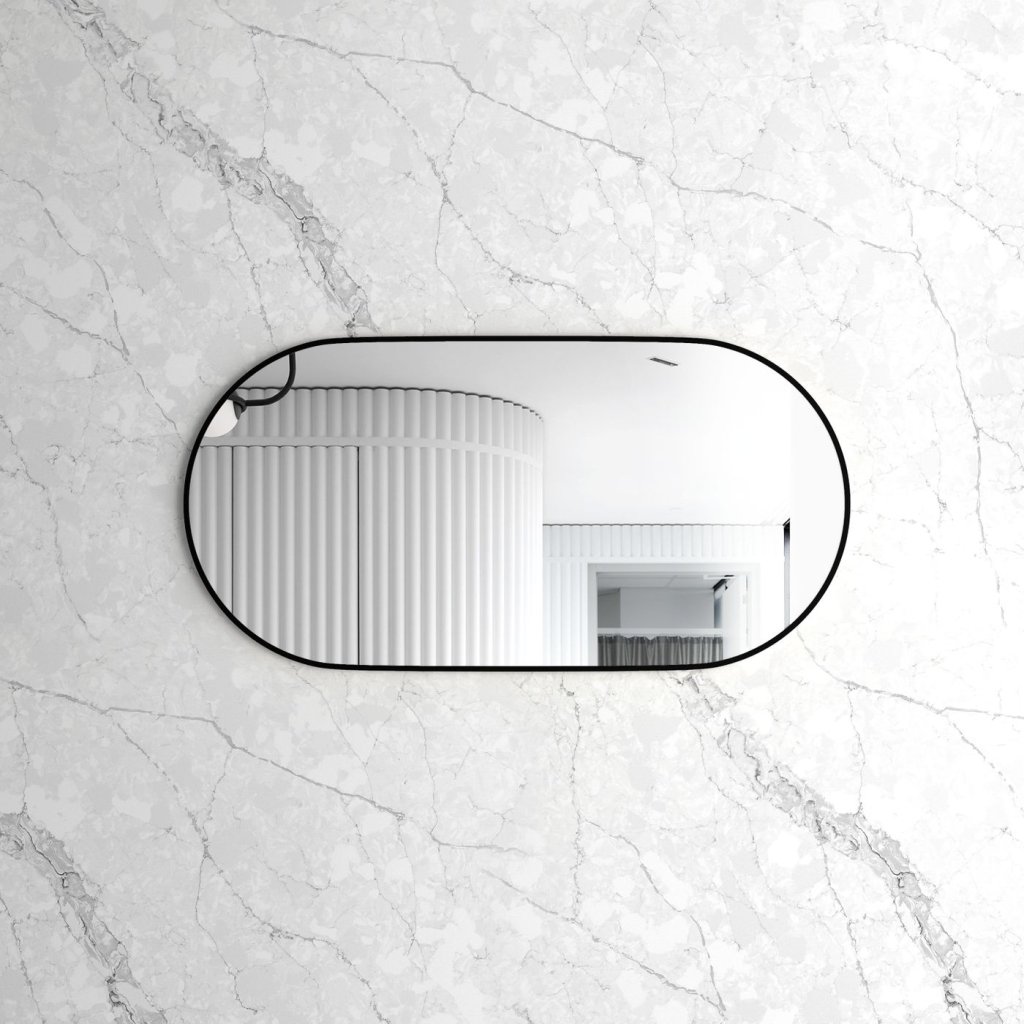
An illuminated bathroom mirror can include many functions, but more functions do not automatically create a better product. Every control, sensor, display and electrical component affects the user experience, rear construction, documentation, testing, serviceability and cost. A focused specification starts with the room and the user, then selects only the functions that solve a defined need.
This function-matrix approach helps designers, buyers and private-label teams compare mirror configurations without relying on the vague labels “smart” or “premium.”
Separate form, light and control
Describe the mirror in three layers. Form covers size, shape, edge or frame, rear depth and mounting. Light covers direction, distribution, output targets, colour appearance and intended task. Control covers switching, dimming, colour selection, sensors and behavior after power interruption.
This separation makes decisions traceable. A buyer can change the frame finish without silently changing the driver, or revise control behavior without assuming that light distribution remains identical.
Define the lighting job
State whether the mirror light is intended for facial task support, ambient effect, wayfinding or a combination. Review the room’s ceiling and wall lighting because the mirror does not operate alone. Shadows, wall colour, mounting height and user distance influence the result.
Translate the intent into project-defined criteria with the lighting designer or qualified professional. These may include measured performance at a stated location, colour characteristics, dimming range or visual uniformity. Avoid assuming that power consumption alone describes brightness or usefulness.
Browse illuminated and decorative mirror formats to identify potential form factors before resolving the exact lighting configuration.
Choose the lighting direction
Front lighting directs light toward the user and can support facial tasks when designed appropriately. Backlighting illuminates the wall and creates visual separation but may contribute less direct facial light. Some designs combine both. Record the intended effect and review it in a representative mock-up.
Wall finish and distance behind the mirror influence a backlit halo. A textured, dark or uneven wall can produce a different result from a smooth pale mock-up. Show rear spacers and clearances on the drawing.
Specify control behavior, not just control type
“Touch control” does not explain what happens. Define the control location, icon, activation method, short- and long-press behavior, dimming sequence, colour selection and indicator state. State whether the mirror returns to a default state or remembers the previous setting after power loss if that matters to the project.
For a wall switch, sensor or external control, describe the operating sequence and interface responsibility. Test usability with representative users. A control that looks minimal may be difficult to locate in low light or may trigger unintentionally during cleaning.
Evaluate colour-temperature selection carefully
Selectable colour settings can help a user compare appearances under warmer and cooler light, but they add control complexity and component requirements. Decide whether the target customer understands and values the option. If included, define the available settings, order of selection and retained-state behavior.
Approve colour appearance with a physical sample under controlled room conditions. Phone photographs and displays adjust colour automatically and are not dependable approval tools on their own.
Treat the demister as a defined zone
A demister is not the same as making an entire mirror immune to condensation. Record the pad location and coverage area, activation method, relationship to the light control and operating information. Confirm that the position supports the intended viewing zone.
Installation environment, ventilation and room conditions affect condensation. Product communication should describe the specified function accurately without promising a universal fog-free result.
Question every additional feature
| Possible feature | User question | Specification question |
|---|---|---|
| Dimming | Will users adjust light for different tasks? | What is the range and control behavior? |
| Colour selection | Does the channel value multiple settings? | Which settings and memory logic apply? |
| Demister | Is condensation in the viewing zone a real issue? | Where is the controlled coverage area? |
| Clock or display | Is information useful in this room? | How is it set, read and retained? |
| Sensor | Does touch-free activation improve the routine? | What is the range and false-trigger risk? |
| Audio or connectivity | Does it solve a validated user need? | What are privacy, support and compatibility implications? |
If the team cannot answer both questions, keep the feature outside the core configuration until it can be justified and verified.
Resolve installation interfaces
Show overall size, weight where relevant, mounting points, rear projections, cable exit, power location, wall clearance and relationship to basin, tap, lighting and adjacent walls. Storage mirror cabinets also need open-door clearances, shelf configuration and internal cable routing.
Electrical installation and local requirements must be reviewed by appropriately qualified professionals for the destination and installation zone. The supplier should declare the exact offered configuration and provide model- or component-level documents. A generic document logo does not establish applicability; use the certificate verification framework to review scope.
Build a configuration code
Assign a code that identifies size, form, frame or edge, lighting route, control and optional functions. Use it on the quotation, drawing, sample, purchase order, carton and inspection record. Avoid burying important electrical or function choices in free-text notes.
Maintain a compatibility matrix. Not every combination of size, frame, sensor and demister may be technically or commercially suitable. A governed option list is safer than promising unrestricted customization.
Approve a functional sample
Review the sample at the planned mounting height in a representative room where possible. Inspect glass, frame, edge, rear construction and mounting. Operate every function and record the sequence. Observe light distribution, control response, unwanted dark areas, visible flicker under the agreed review method, noise and heat conditions according to the defined procedure.
Check behavior after switching the supply off and on. Confirm that the sample’s components and configuration match the documentation. If temporary parts are used, identify the functions that remain unapproved.
Plan quality control around functions
The inspection plan should verify model identity, dimensions, appearance, mounting points, wiring or component references, control sequence and each included function. Define whether every unit or a sample from the lot is checked for each characteristic, along with the acceptance rule and record.
Protect the approved configuration from substitution. A changed driver, sensor, touch control or heating pad can affect behavior, documentation and fit. Require written change approval and new evidence or sampling where appropriate.
Include service and user information
Provide clear operating, cleaning and installation information for the exact model. Identify replaceable components or claim data only where the offered configuration supports it. The after-sales process should use the model, batch, symptoms, installation information and photographs to distinguish product, power, installation and handling issues.
Create the smallest useful feature set
Score every feature against user need, frequency, clarity, technical impact, evidence, serviceability and price. Keep the core model focused and reserve justified options for channels that can explain and support them.
Compare mirror and cabinet formats through the ArcQuay product centre. When the size, destination, lighting intent and desired functions are defined, send a configuration brief for model-level review. A precise function matrix produces a more useful result than a long list of unchecked features.